Dikteon Cave
Ninety tonnes of material flown to a cave mouth at 1,025 metres — then finished by hand, in the dark, inside one of the most visited caves in Greece.
- 90tMaterials and tools moved to site
- 115Helicopter sorties
- <5hrsTo complete the airlift
- 1,025mAltitude of the cave
Figures stated by Lydakis Construction
- Project
- Stability restoration of the Dikteon Cave
- Site
- Psychro, Lasithi — north flank of Mount Dikti
- Altitude
- 1,025 m
- Cave area
- ≈ 2,200 m²
- Method
- Retaining and support with stainless-steel anchors
- Category
- Infrastructure · Heritage
You cannot drive to the birthplace of a god
The Dikteon Cave opens on the northern flank of Mount Dikti at 1,025 metres, and runs to roughly 2,200 square metres of chamber. It is among the most internationally known caves in Greece — of serious archaeological interest, and by local tradition the place where Zeus was born. Every year it takes visitors who arrive on foot up the same mountain path.
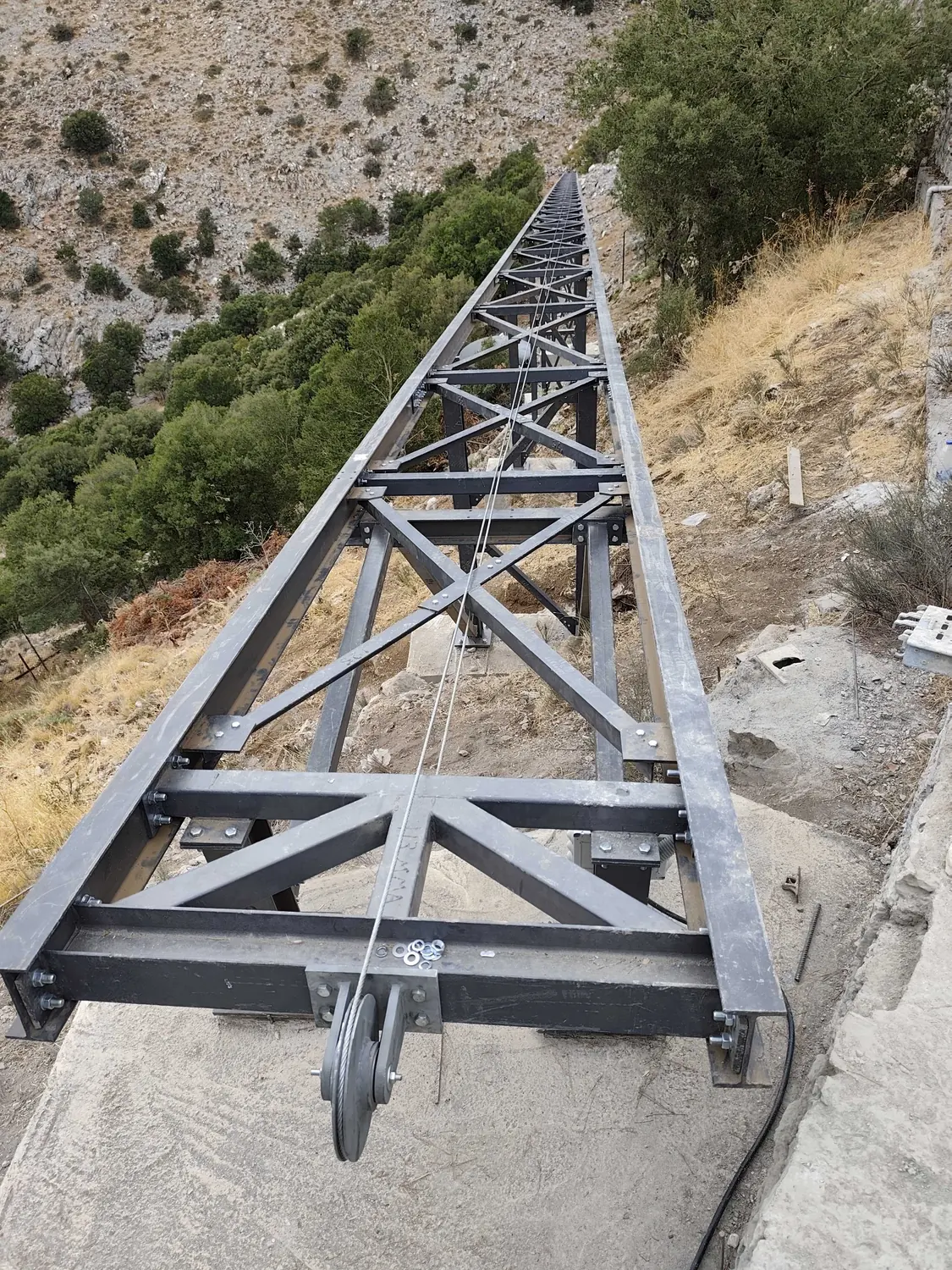
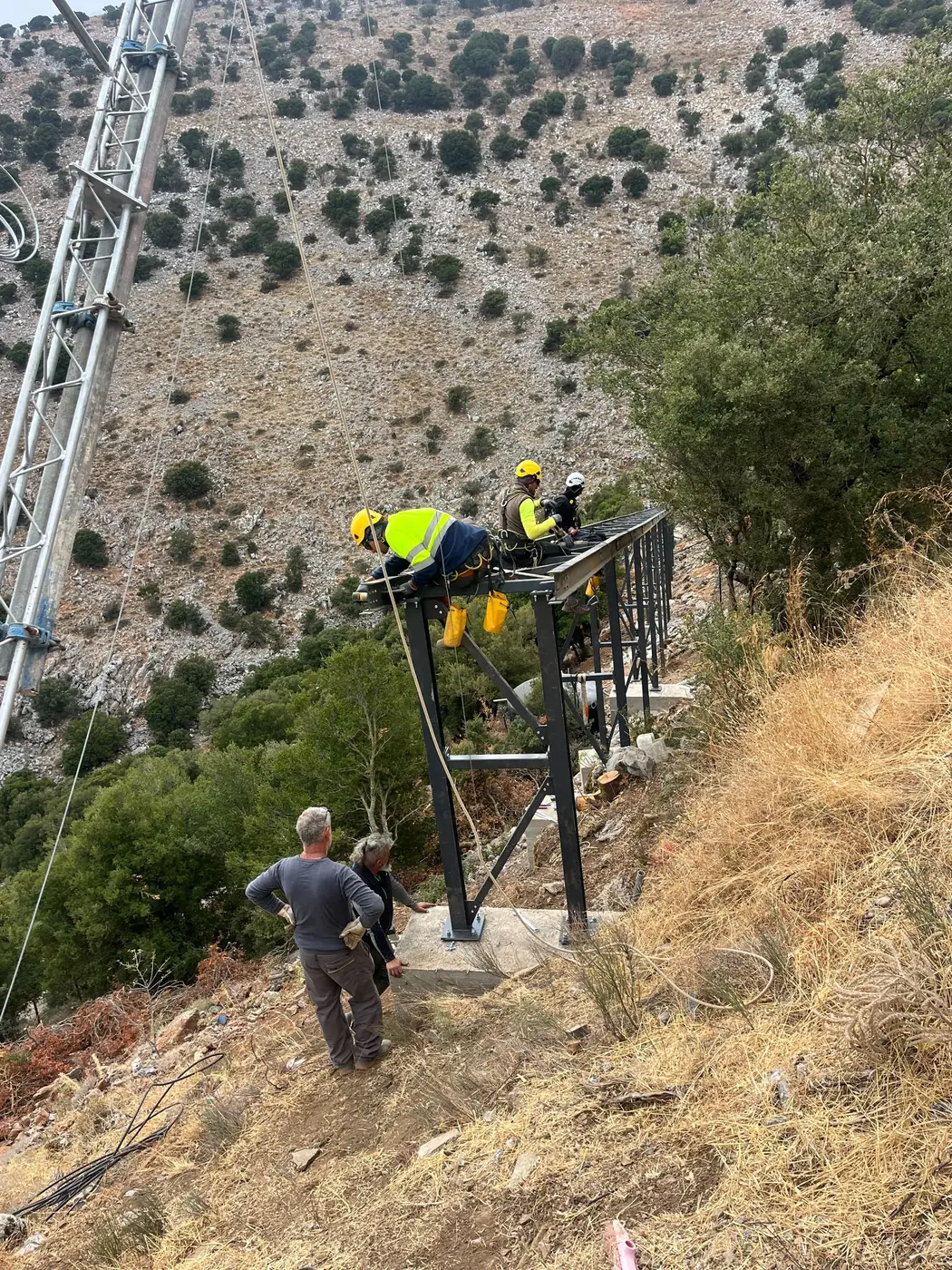
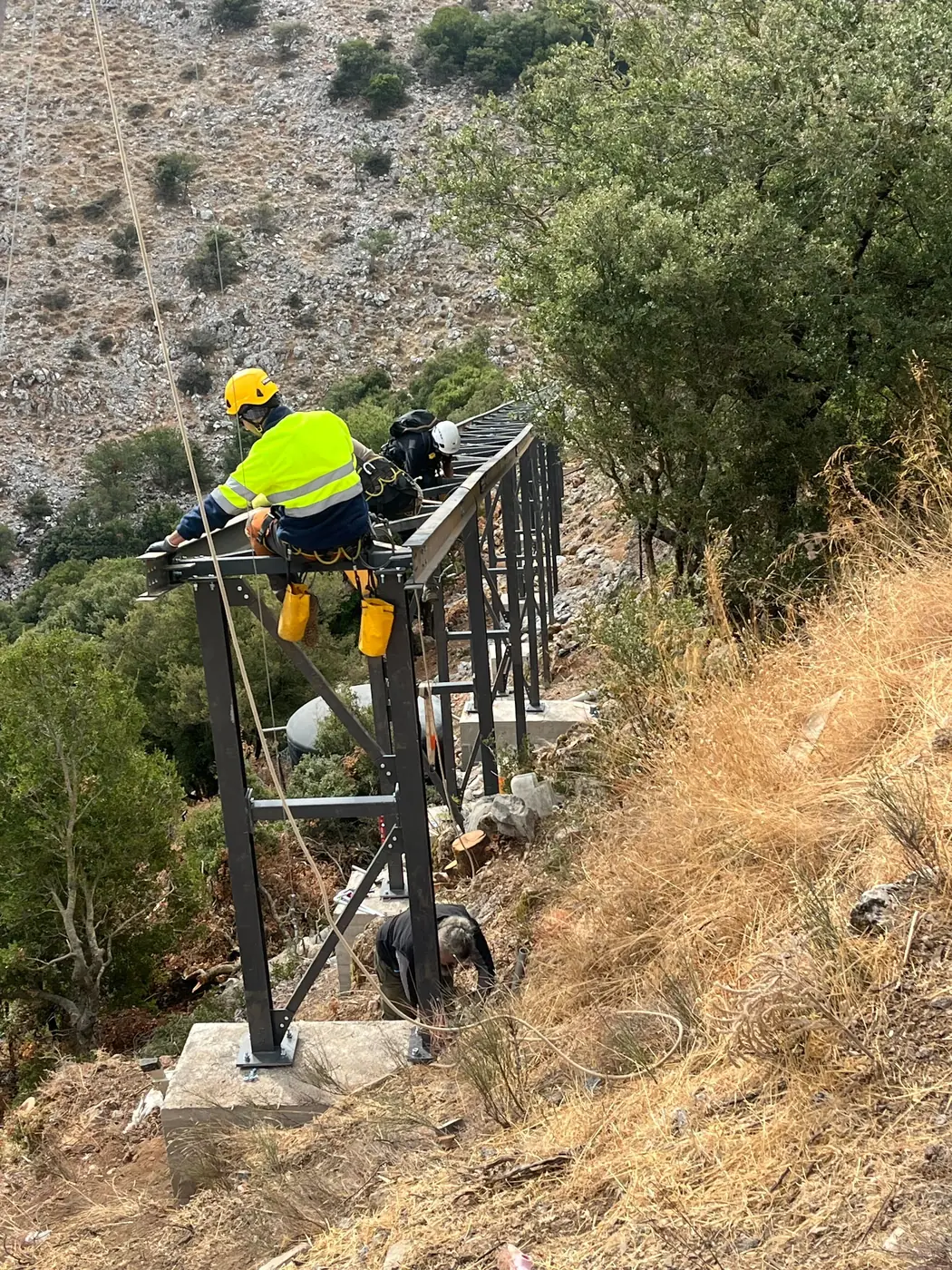
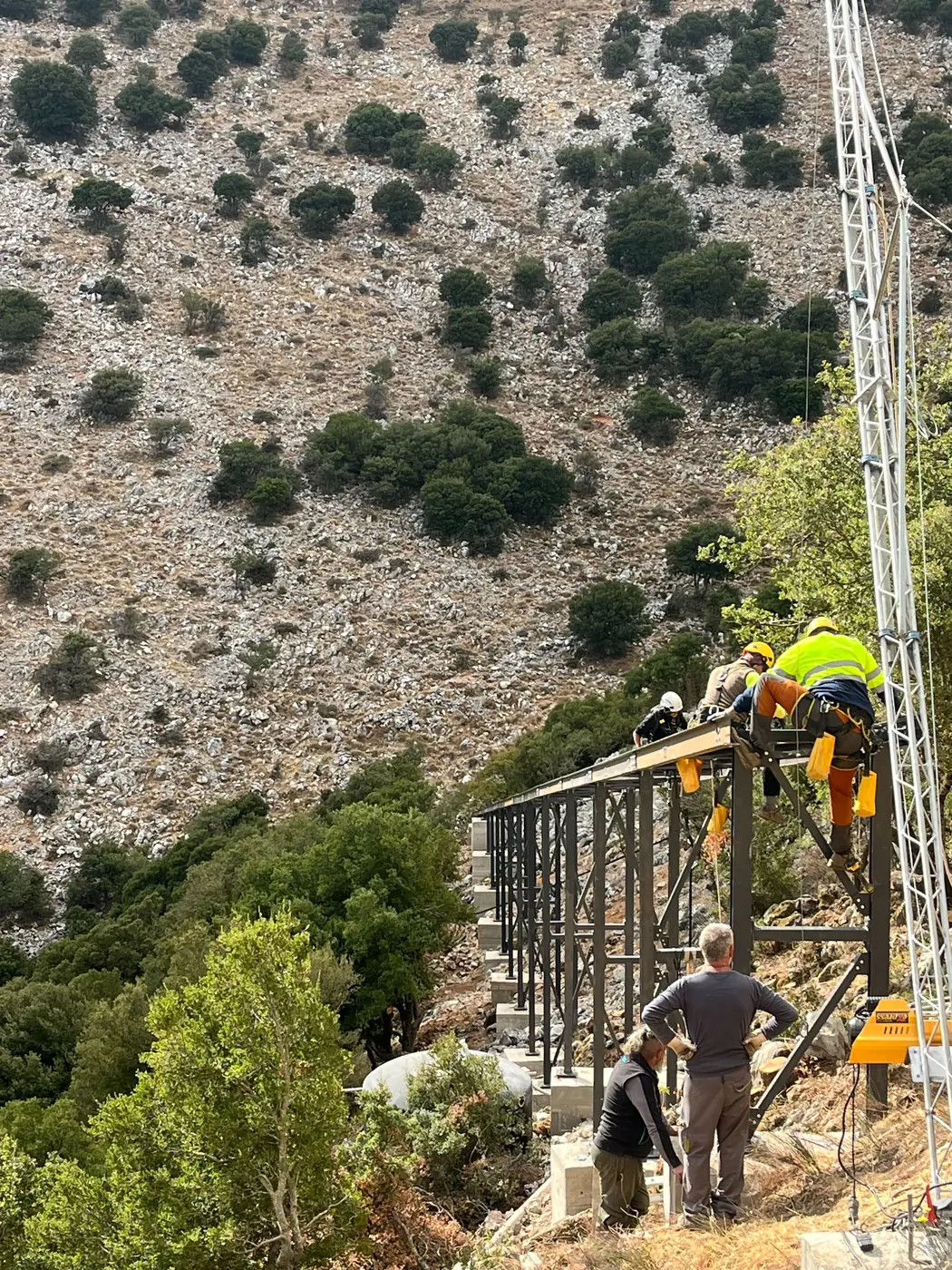
That path is the whole problem. Rock fragments come loose, inside the cave and on the approach, and fixing that means bringing in materials a mule track cannot carry. Ninety tonnes of material and tools were flown up in 115 helicopter sorties — and the entire airlift was compressed into under five hours, deliberately, so that the residents and shopkeepers of Psychro lost as little of their day to it as possible.
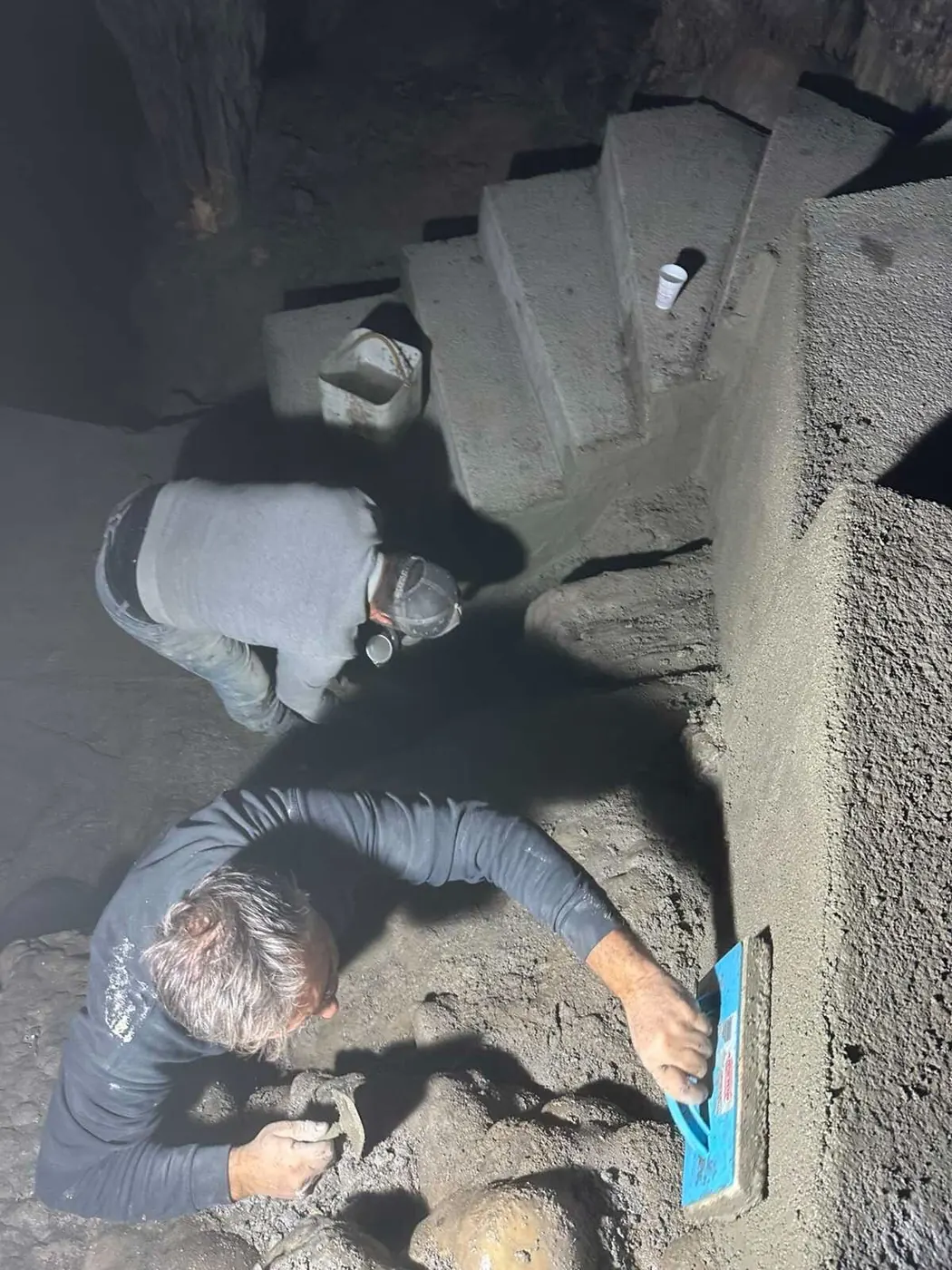
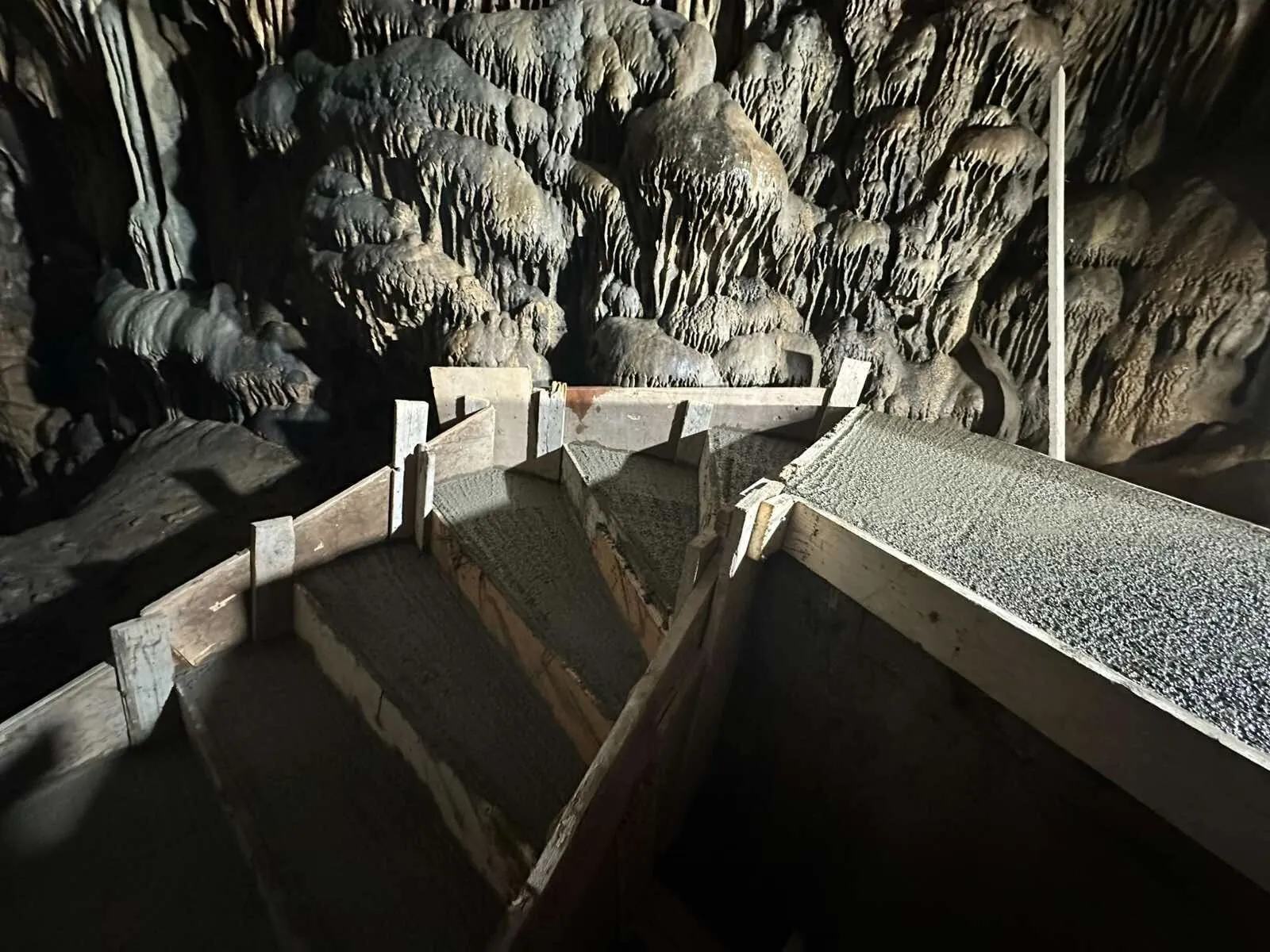
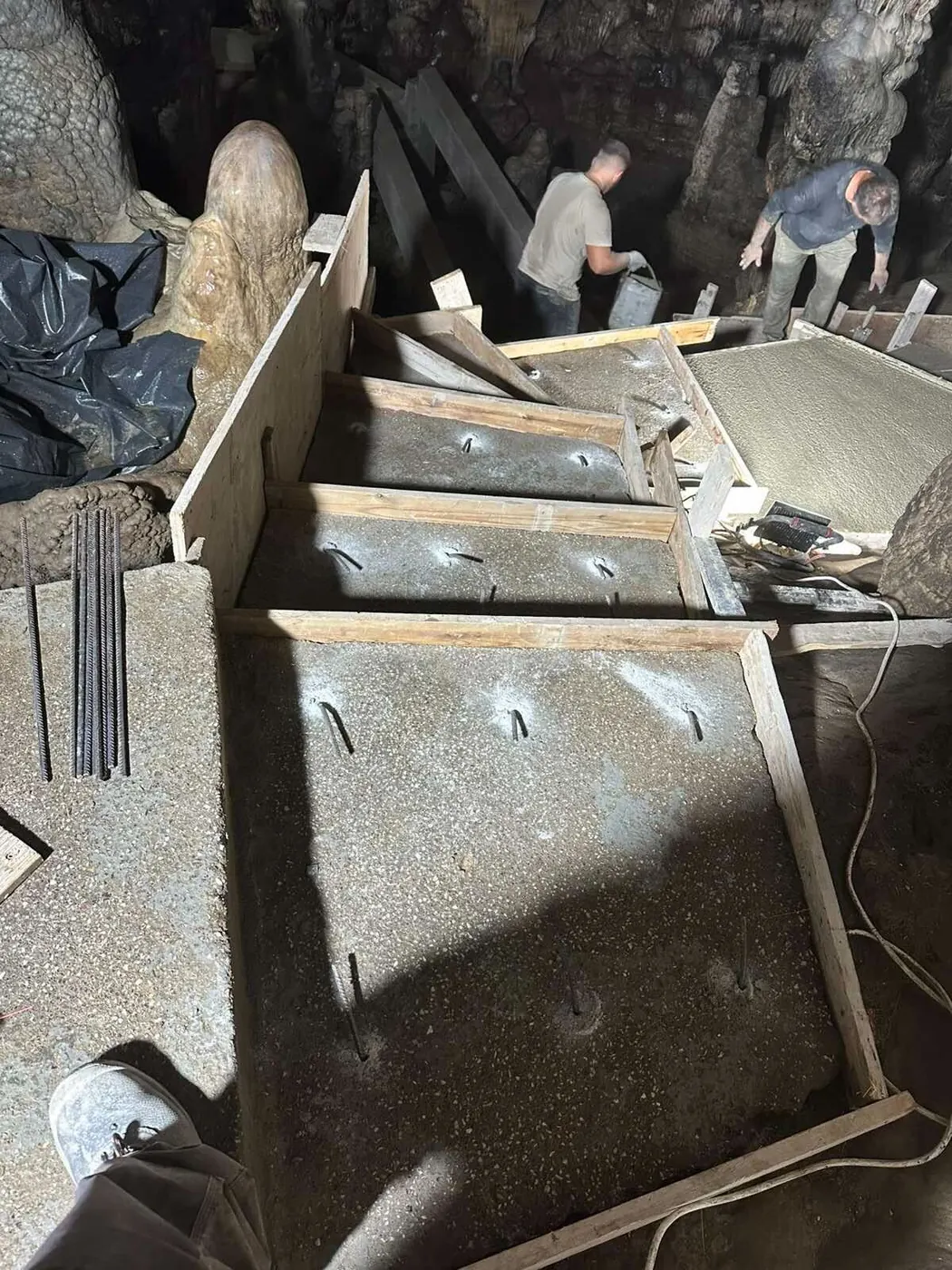
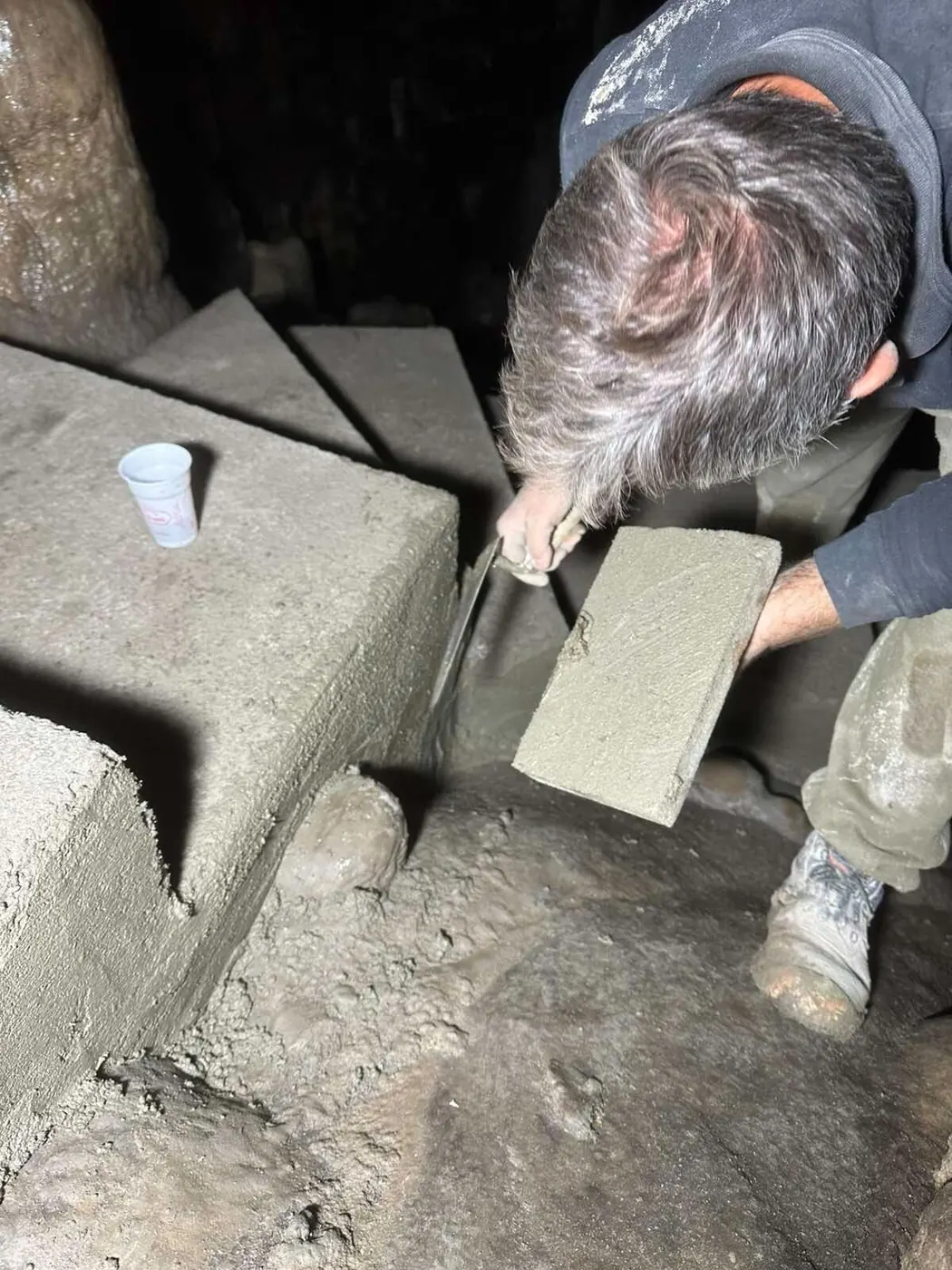
What follows is slower. Stainless-steel anchors, chosen because nothing corrodible should be left inside a cave. Concrete placed in timber formwork and floated by hand, by worklight, against formations that took a hundred thousand years to grow and would take a second to break.
Αποκατάσταση Ευστάθειας του Σπηλαίου Δικταίον Άντρον, Ψυχρό Λασιθίου
Getting there
There is no road to a cave mouth on the north flank of Mount Dikti. Ninety tonnes of material and tools went up by air in 115 sorties, compressed into under five hours so the village below lost as little of its day as possible.
Holding the rock
The contract is a stability restoration: rock fragments fall, inside the cave and outside it. The answer is retaining and support work pinned with stainless-steel anchors — chosen because anything that corrodes has no business being left in a cave.
Working by hand
Inside, there is no room for machines and no daylight to work by. Concrete is placed in timber formwork and finished by hand, by worklight, against a wall of stalactites that cannot be touched.
Let's build it: from the first drawing to the keys
+30 2810 225586In a hurry? Call +30 2810 225586 or write to info@lydakis.com.
Nothing opened? Email us at info@lydakis.com or call +30 2810 225586.