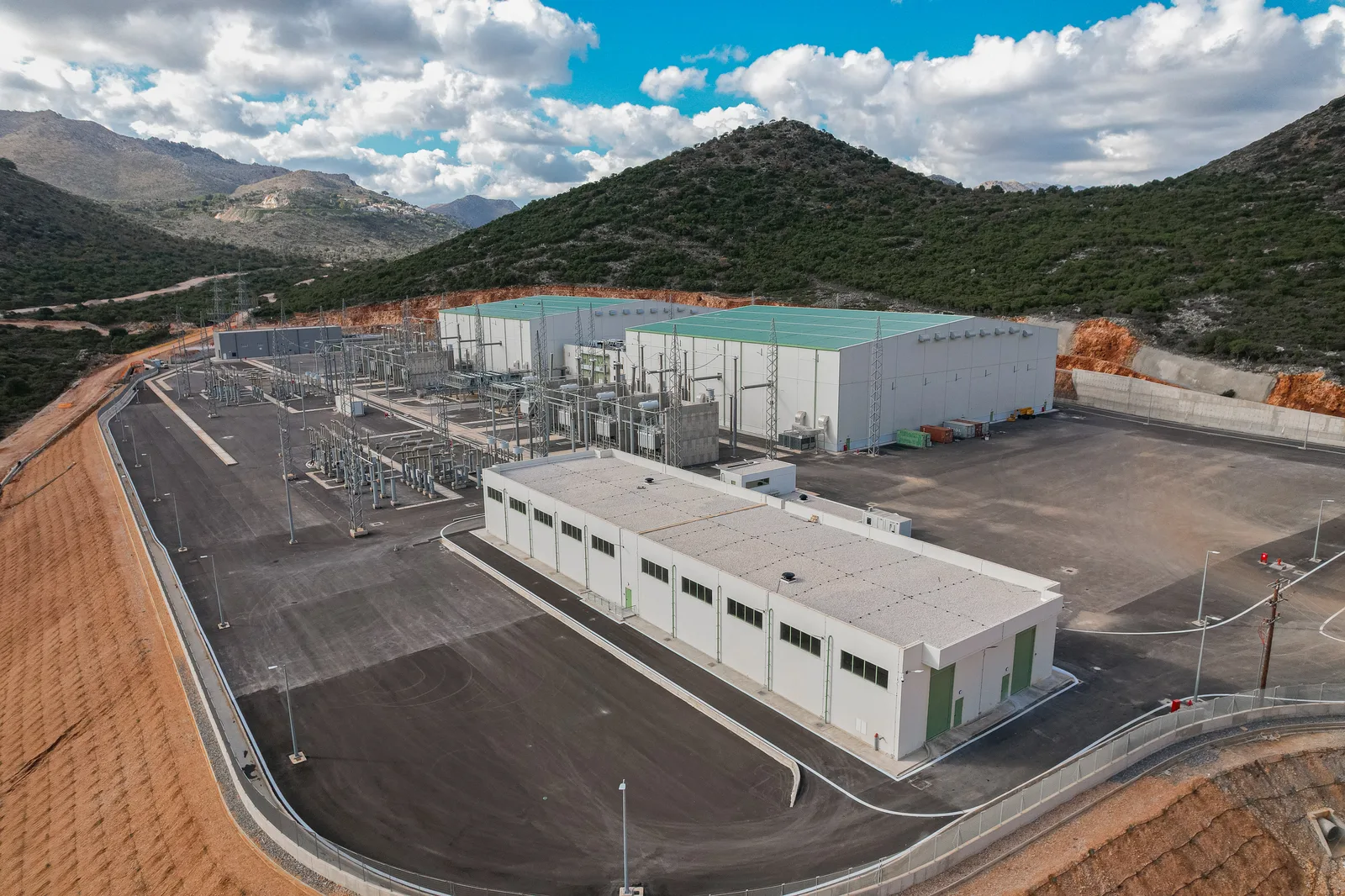
Damasta Converter Station
Crete’s end of the 1,000 MW power bridge to the mainland — the site drawn the way it was planned, then delivered.
Figures: Siemens Energy & IPTO (ADMIE) — the Crete–Attica interconnection
- Project
- Crete–Attica electrical interconnection
- Owner
- Ariadne Interconnection (IPTO)
- Consortium
- Siemens Energy · TERNA
- Lydakis role
- Building works on the converter halls, for TERNA
- Location
- Damasta, north Crete
- Years
- Details on request
The building that ended an island's isolation
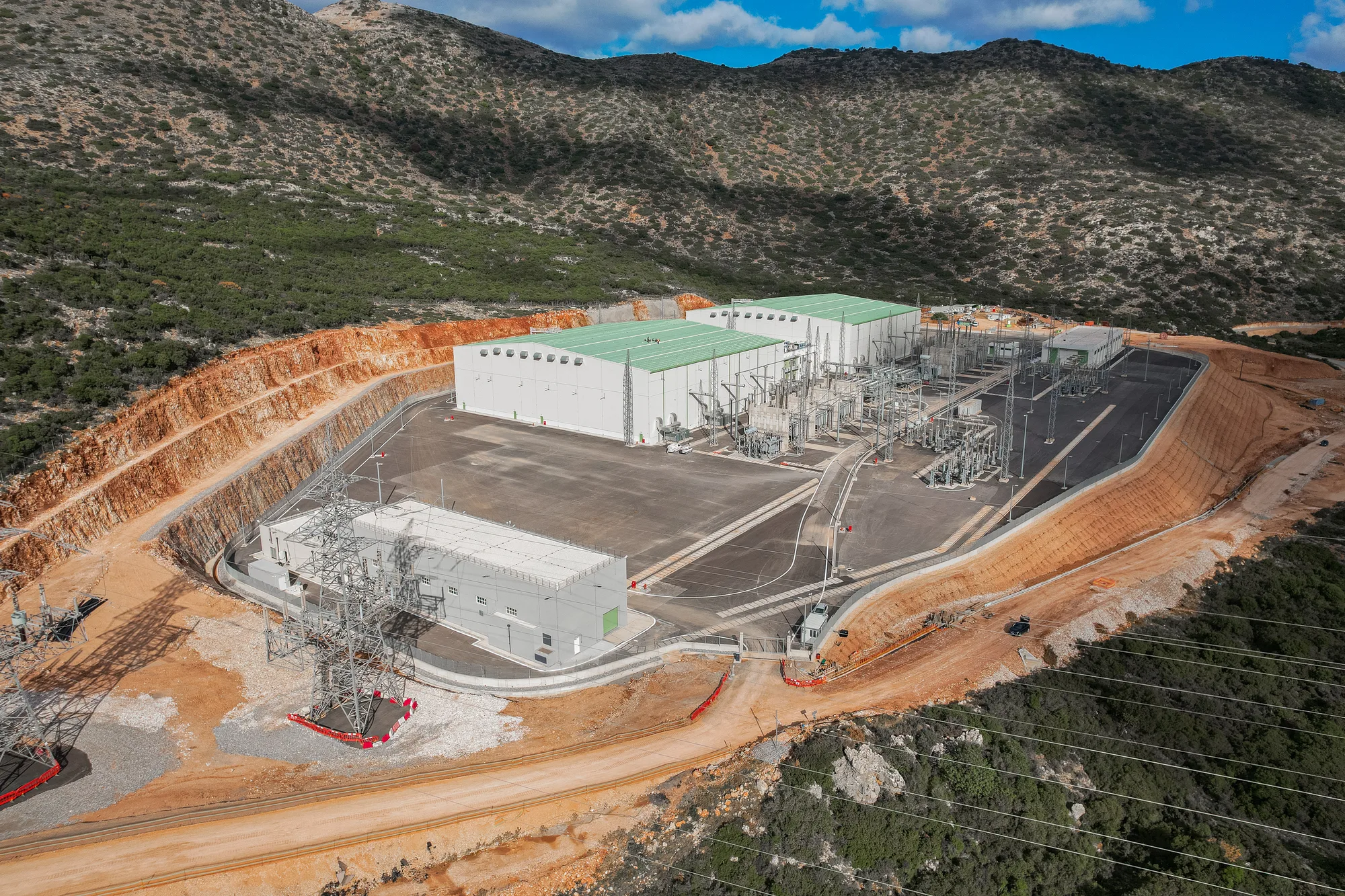
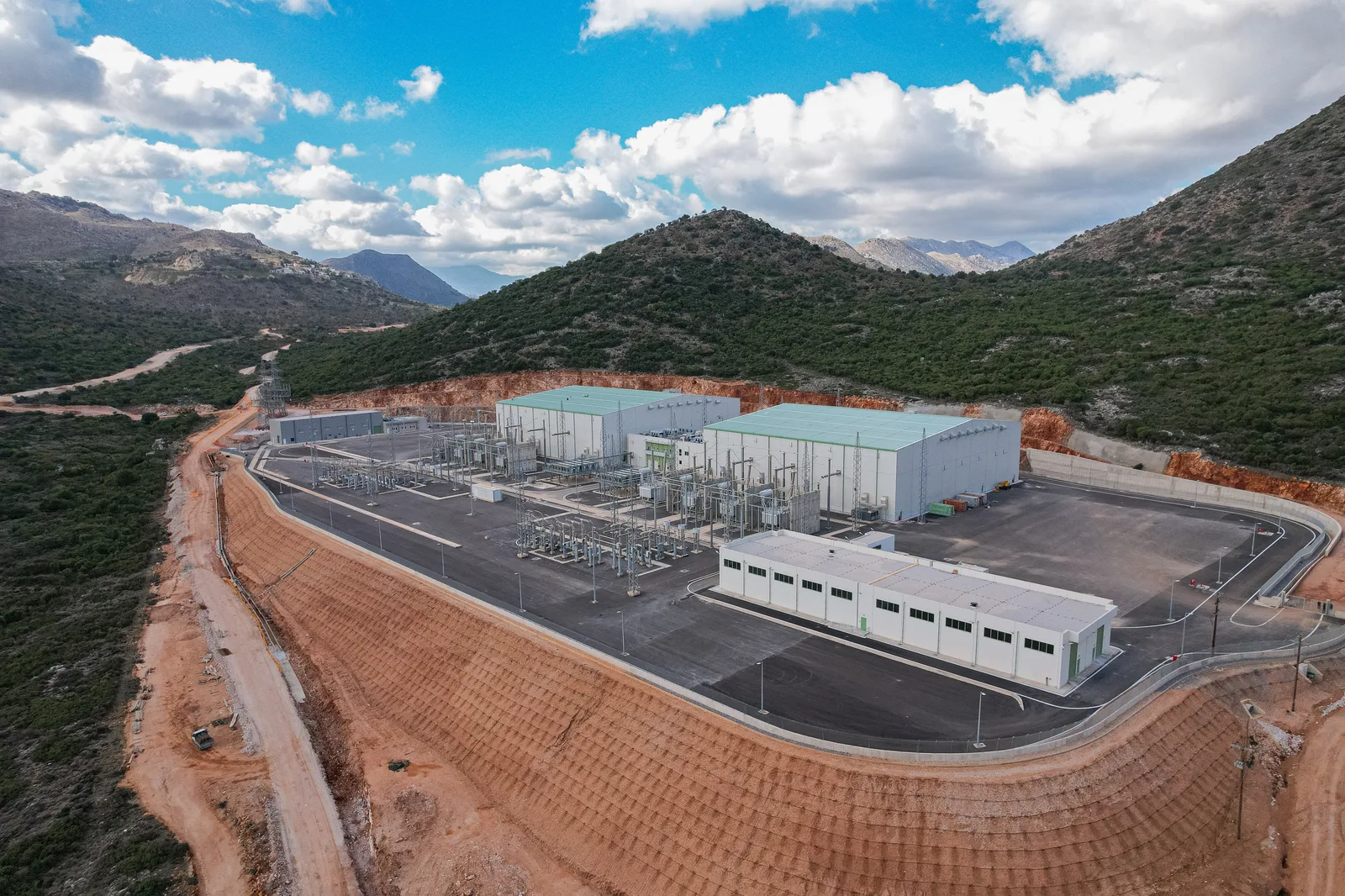
For as long as anyone on Crete can remember, the island made its own electricity — expensively, in oil-fired plants. The Crete–Attica interconnection changed that: a 1,000 MW direct-current link running roughly 330 kilometres from the mainland grid, through some of the deepest water ever crossed by a power cable, to a terraced platform carved into a mountain saddle above the village of Damasta.
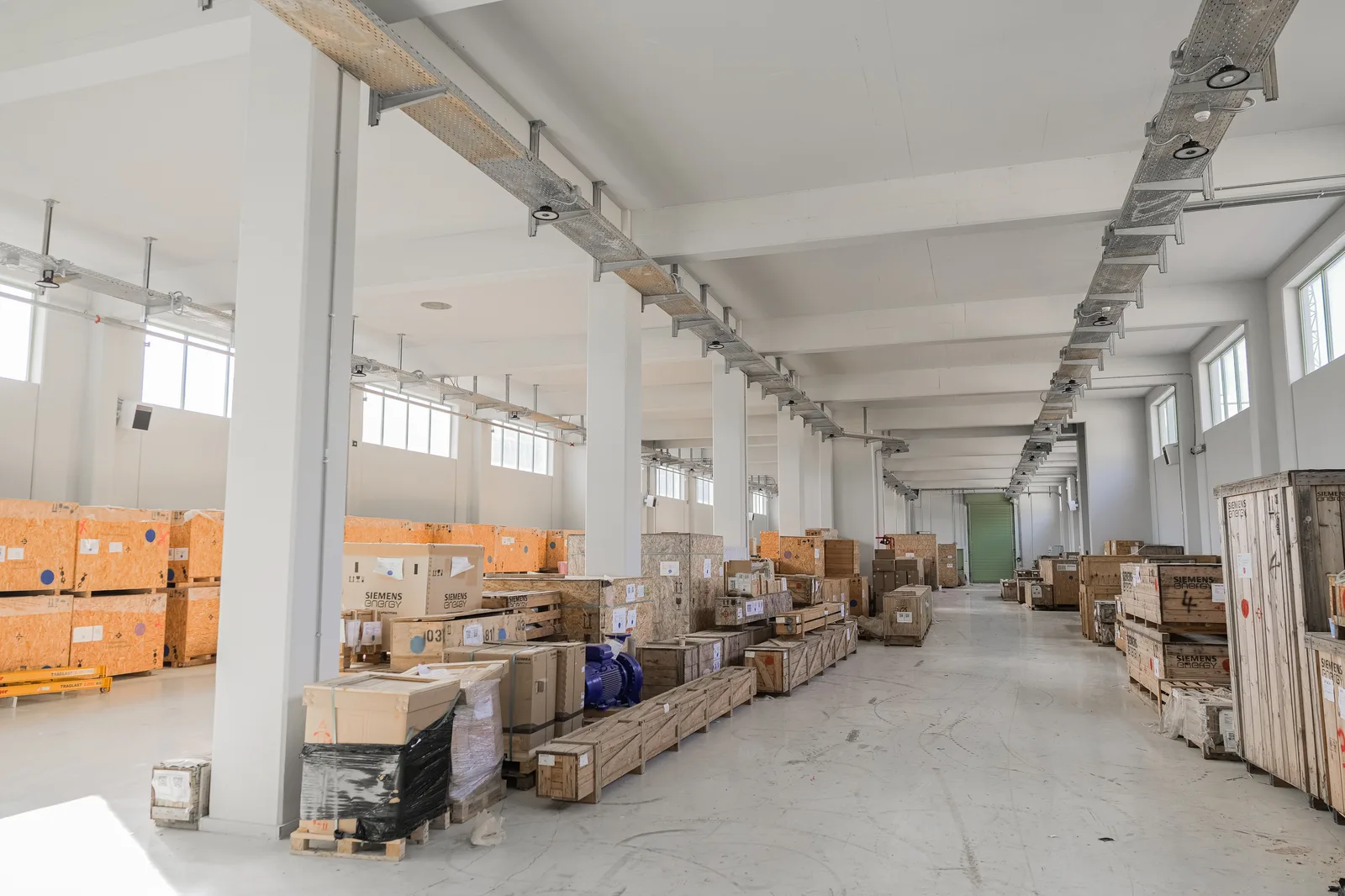
Lydakis delivered the building works on the converter-station halls — the structural shell that houses the direct-current interconnection between Crete and Attica — for TERNA, the consortium's civil-works contractor.
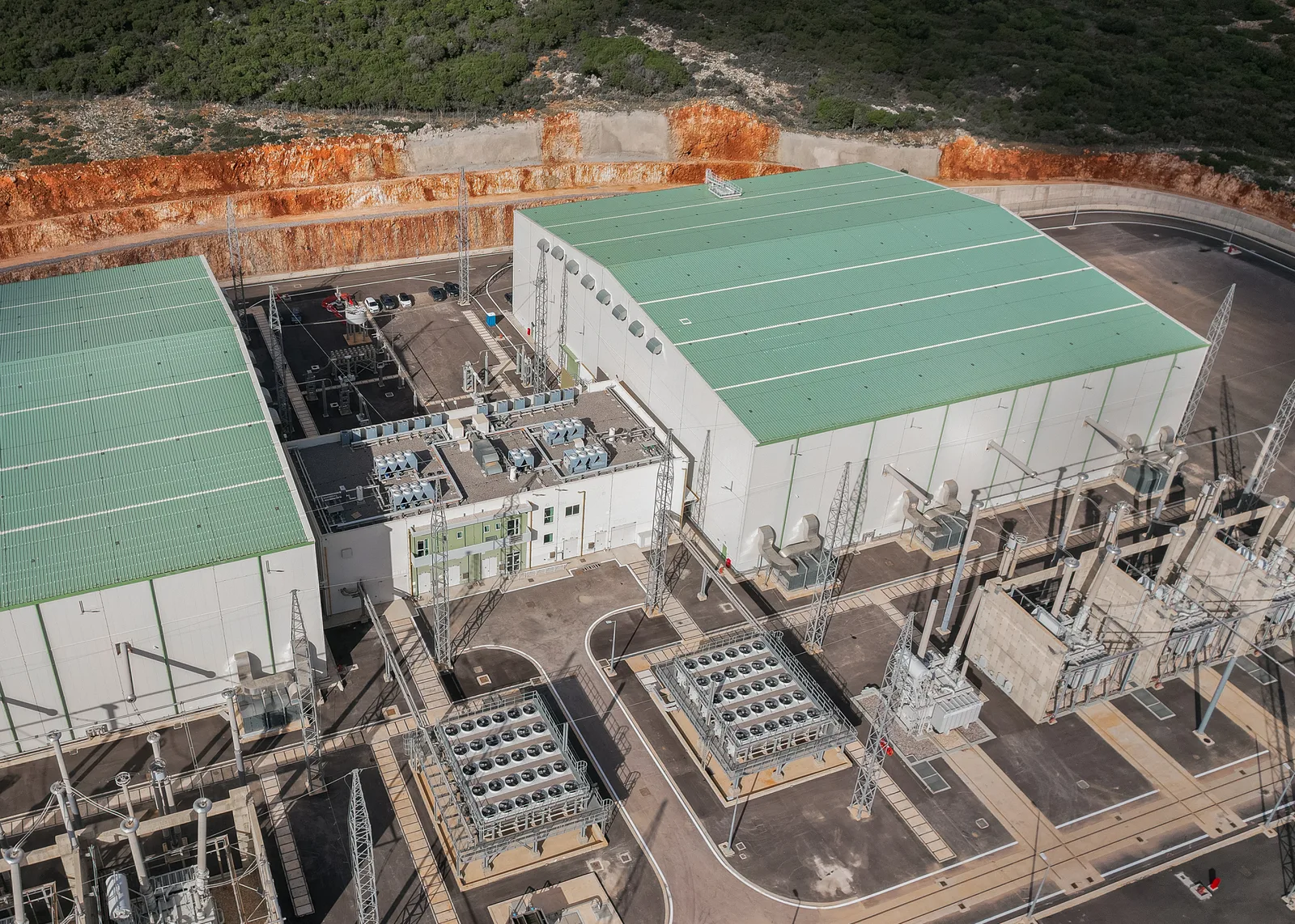
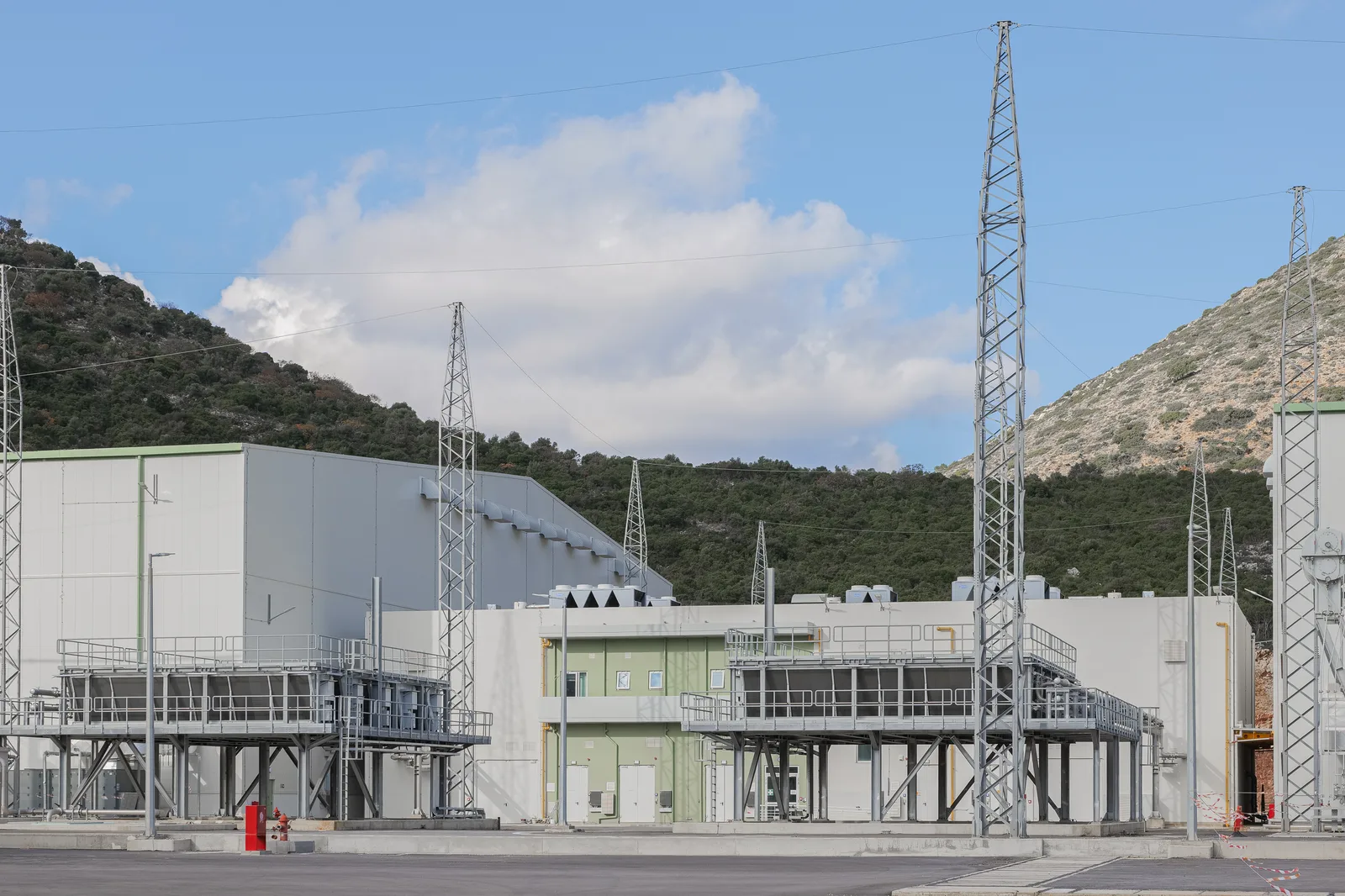
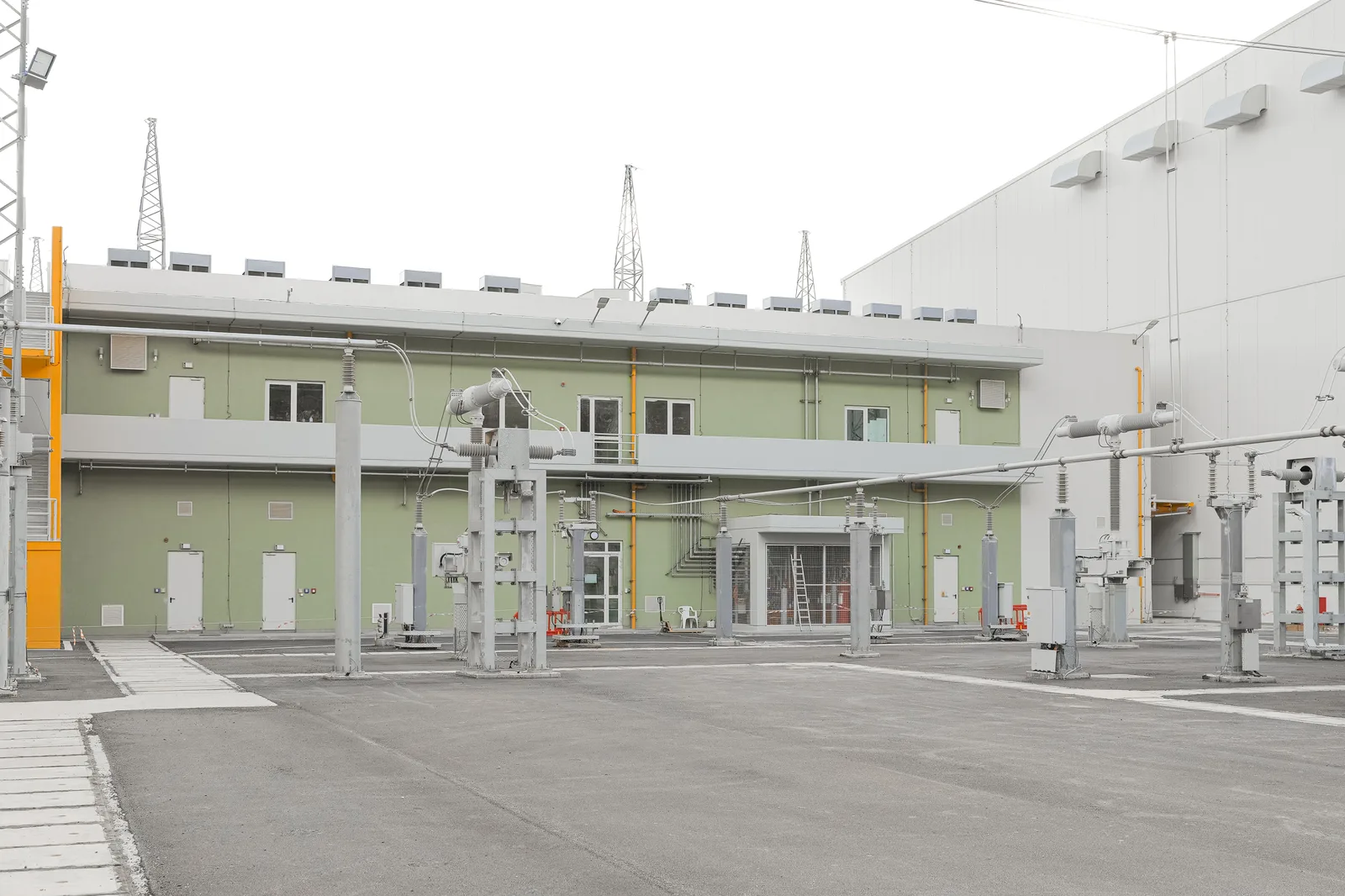
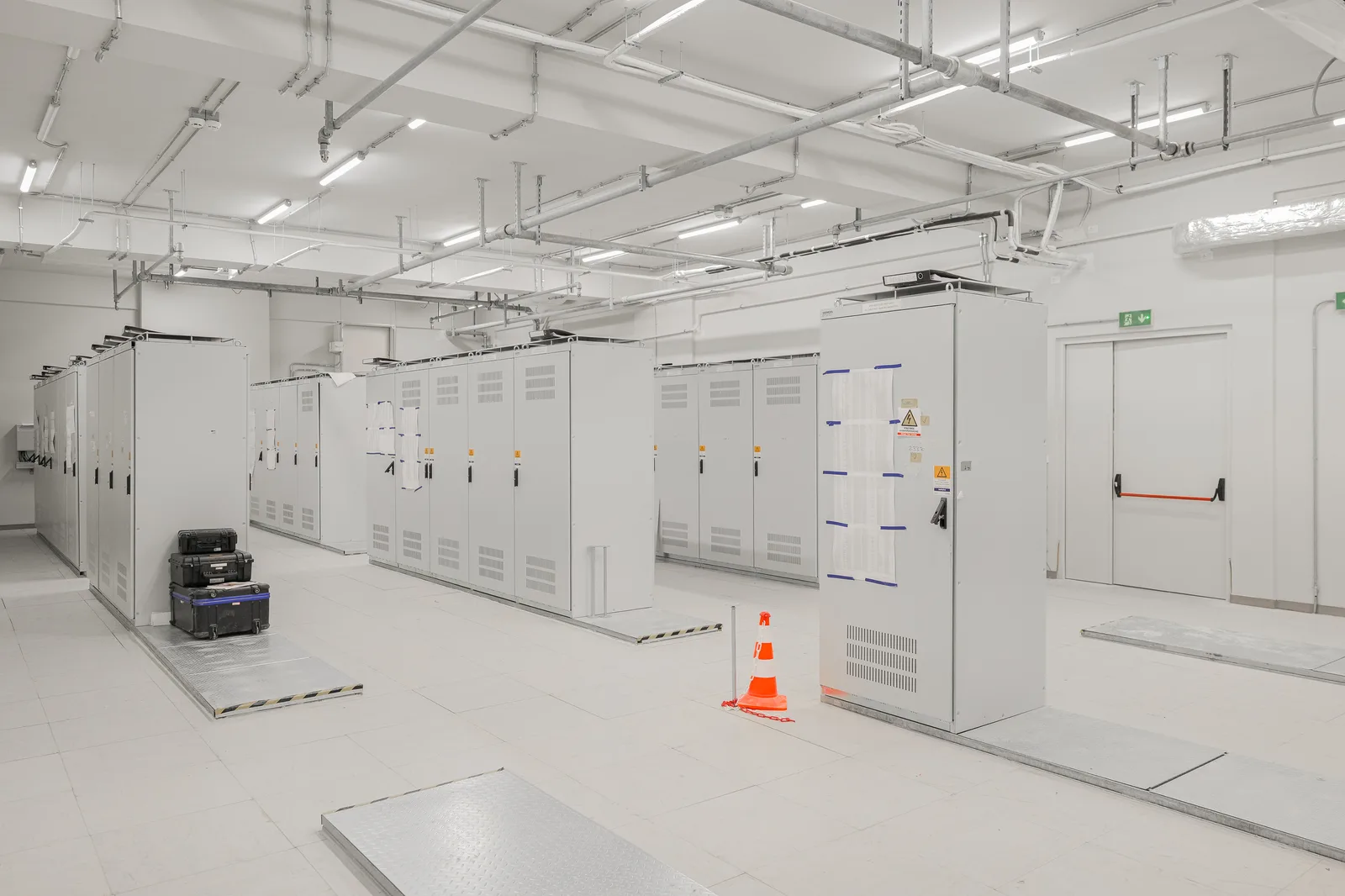
The station converts the direct current arriving from Attica back into alternating current for the Cretan grid — Voltage Source Converter technology behind the twin green-roofed halls in the photographs. According to IPTO, the link saves Greek consumers on the order of €500 million a year and cuts CO₂ emissions by about 1.5 million tonnes annually.
Ηλεκτρική διασύνδεση Κρήτης – Αττικής · Σταθμός Δαμάστας
Ariadne Interconnection · IPTO
Greece's transmission operator created a dedicated company to build the country's largest electricity interconnection.
Siemens Energy & TERNA
Siemens Energy leads the converter-station consortium; TERNA carries the civil works and equipment installation.
Lydakis Construction
When a project of national scale lands in Crete, the island's own builders deliver it — construction works at the Damasta site, for TERNA.
About the Crete–Attica interconnection
What does the Damasta converter station do?
It is the Crete terminal of the Crete–Attica electrical interconnection. The station converts the ±500 kV direct current arriving through roughly 330 km of cable from the mainland into alternating current for the Cretan grid — and back — using Voltage Source Converter (VSC) technology, with a transfer capacity of 1,000 MW.
Who built the Damasta station?
The interconnection is owned by Ariadne Interconnection, a subsidiary of IPTO (ADMIE), Greece's transmission operator. The converter stations were delivered by a consortium led by Siemens Energy with TERNA S.A. responsible for the civil works — and Lydakis Construction carried out construction works on the Damasta site for TERNA.
Why does the interconnection matter for Crete?
It ends the island's decades-long energy isolation. According to IPTO, the link saves consumers on the order of €500 million a year and reduces CO₂ emissions by about 1.5 million tonnes annually, replacing local oil-fired generation with power from the mainland grid.
Sources: Siemens Energy — HVDC power bridge press release · IPTO (ADMIE) — Crete–Attica interconnection
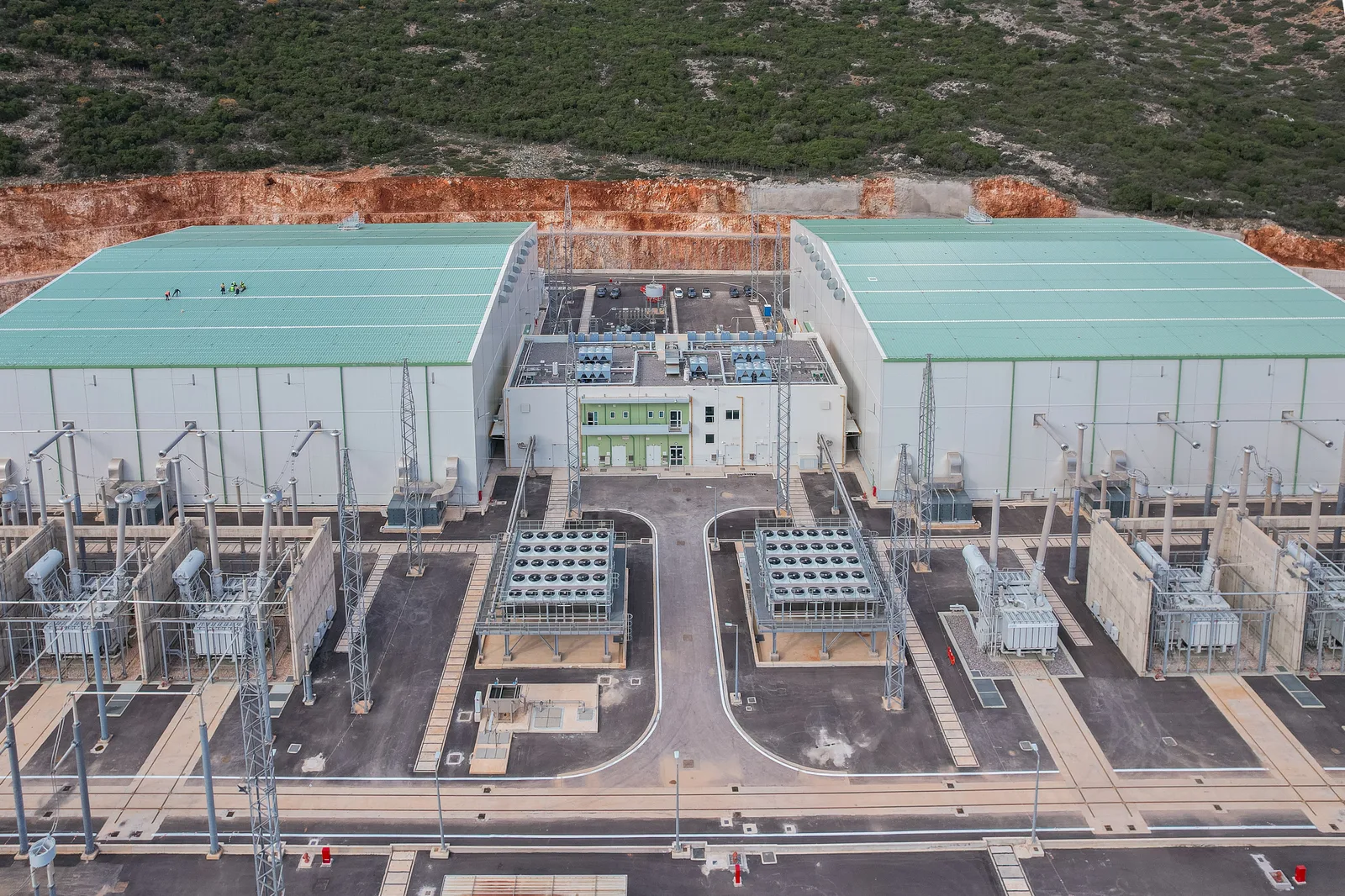
Inside the Damasta converter station
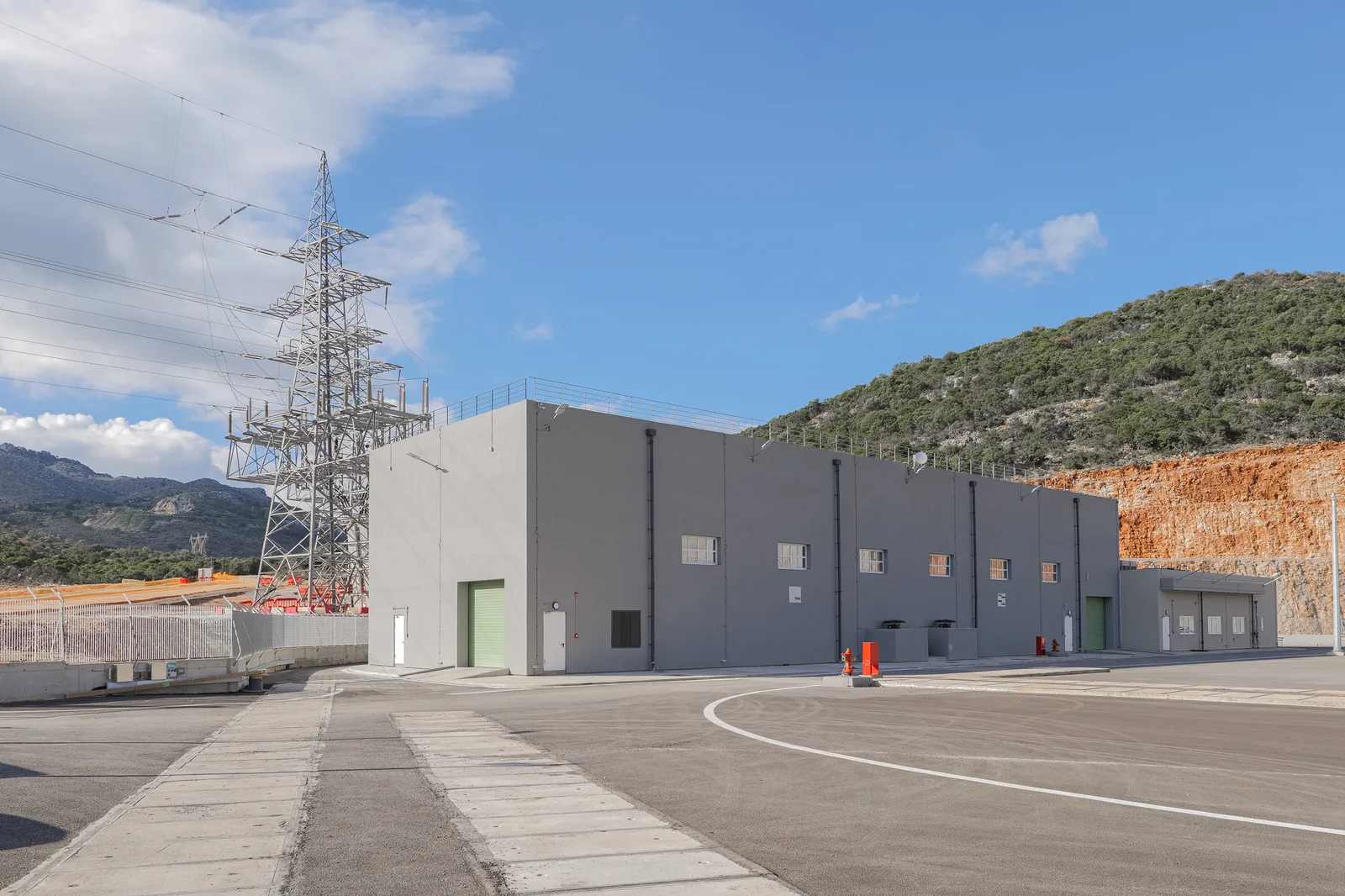
Drag sideways — the professional shoot of the delivered station
Let's build it: from the first drawing to the keys
+30 2810 225586In a hurry? Call +30 2810 225586 or write to info@lydakis.com.
Nothing opened? Email us at info@lydakis.com or call +30 2810 225586.